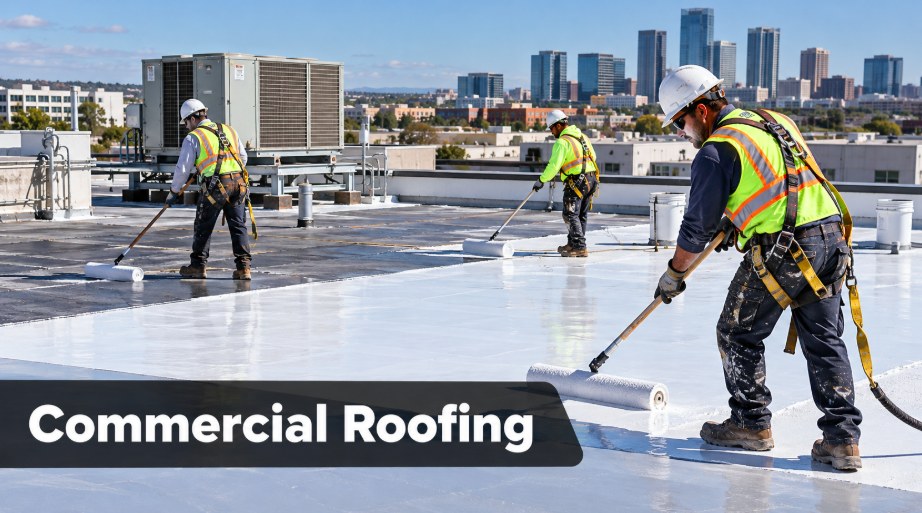
Commercial Roofing Services: Installation, Repair & Maintenance
Commercial roofing projects require careful planning because roof performance can affect business operations, employees, inventory, mechanical equipment, and occupied interior spaces. Unlike many residential roofs, commercial roofing systems often include extensive low-slope surfaces, internal drains, rooftop equipment, and specialized waterproofing assemblies.
Our commercial roofing services focus on protecting commercial properties while considering building operations, roof access, drainage design, and long-term maintenance requirements.
Commercial Roof Installation
A commercial roof must be selected according to the building's structure, design, roof slope, equipment requirements, and local environmental conditions.
Common commercial roofing systems include:
TPO Roofing
Thermoplastic polyolefin membranes commonly used on low-slope commercial roofs. Properly designed systems use compatible seams, flashing, attachment methods, and insulation.
EPDM Roofing
Synthetic rubber membranes available in different installation configurations. EPDM is commonly used on large low-slope roof surfaces.
PVC Roofing
Thermoplastic membranes with heat-welded seams. System selection should account for chemical exposure, roof use, and manufacturer requirements.
Modified Bitumen
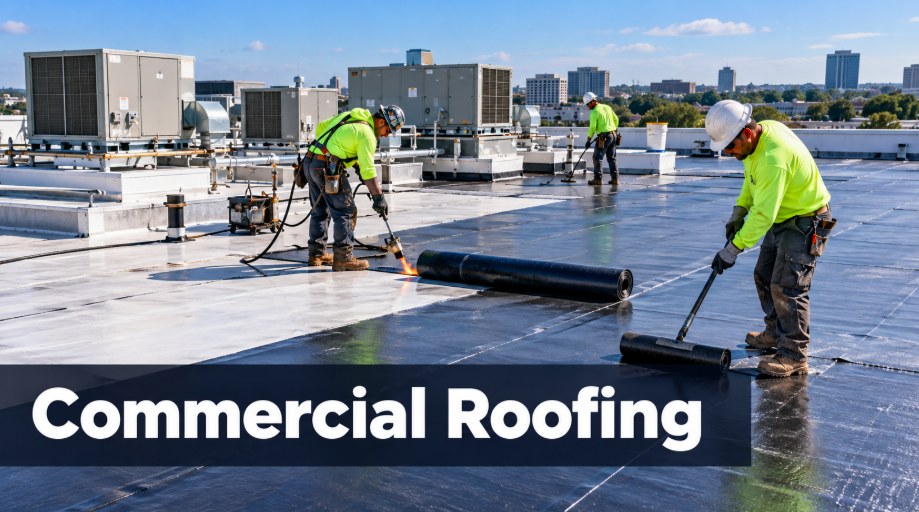
Asphalt-based membrane systems that may be installed using approved torch-applied, cold-applied, self-adhered, or other manufacturer-specified methods.
Metal Roofing
Suitable for many commercial and industrial buildings, particularly where the roof structure and slope support the selected panel system.
The appropriate choice depends on much more than material pricing. Roof insulation, drainage, attachment, wind-uplift resistance, and existing construction must also be considered.
Commercial Roof Repair
Commercial roof leaks frequently develop around details rather than across uninterrupted membrane surfaces.
Potential problem areas include equipment curbs, roof drains, plumbing penetrations, seams, parapet walls, edge metal, and previous repairs.
Our commercial roofing repair approach focuses on locating the defect and selecting a compatible repair method.
Repairing a membrane may require surface preparation, specialized patches, seam welding, adhesives, or replacement of affected sections depending on the material.
Using an incompatible patching product can create new problems, so roof system identification is an important part of the evaluation.
Commercial Roof Replacement and Restoration
When a commercial roof experiences widespread deterioration, repeated leaks, saturated insulation, or extensive membrane damage, replacement may offer a more practical solution than continuing isolated repairs.
Before recommending replacement, the roof should be evaluated for moisture intrusion, drainage deficiencies, substrate condition, and the possibility of an approved restoration or recover system.
Some existing roofs may qualify for coating or restoration. Others require removal of compromised materials, correction of substrate conditions, and installation of a new assembly.
Any recover project must comply with applicable building codes and the requirements of the proposed roofing system.
Commercial Roof Maintenance
Routine roof maintenance helps property managers identify developing problems before they disrupt normal operations.
Important maintenance considerations include:
- Removing debris from roof drains and scuppers
- Examining membrane seams and transitions
- Checking roof penetrations and equipment supports
- Identifying damaged flashing
- Inspecting roof edge details
- Evaluating areas of recurring standing water
- Checking damage caused by rooftop service traffic
- Documenting developing defects
Ponding water requires particular attention. When water remains on a low-slope roof for extended periods, the drainage system and roof design should be evaluated rather than relying on surface patching alone.
Roofing for Commercial Properties
Commercial roofing needs vary across warehouses, retail centers, office buildings, restaurants, multi-family properties, and industrial facilities.
A warehouse may prioritize expansive roof coverage and rooftop drainage, while a restaurant may require additional coordination around ventilation and mechanical penetrations.
Occupied buildings may also require scheduled work areas, careful material handling, access planning, and temporary protection during construction.
Our Commercial Roofing Process
Building and Roof Assessment
We review the roof system, drainage, rooftop equipment, access points and how the building is used day to day.
System Identification
We identify the existing membrane or roof type and check for moisture, damaged insulation and previous repairs.
Proposal and Scheduling
You receive clear recommendations and a work schedule planned around your business operations and tenants.
Installation or Repair
Our crew completes the approved work using compatible materials and manufacturer-specified methods.
Final Review and Maintenance Plan
We inspect the finished work, clean up the site and recommend a maintenance schedule for your roof.
Commercial Roofing Cost in Los Angeles
Average 2026 installed prices for common commercial roofing systems in Los Angeles. Commercial projects are always priced after a site visit.
TPO Roofing
- Heat-welded seams
- Popular for low-slope roofs
- Reflective white surface
Roof Coating Restoration
- Can extend roof life
- For eligible roofs only
- Lower roof surface temperatures
Modified Bitumen
- Multi-layer protection
- Good for low-slope roofs
- Several installation methods
Metal Roofing
- For suitable roof slopes
- Long service life
- Many finishes available
PVC and EPDM systems, insulation upgrades and drainage corrections are quoted per project after inspection. These are average market prices, not a quote. Your exact price is confirmed after a free inspection.
What Affects the Price
- Roof size
- Roof system type
- Insulation and drainage
- Rooftop equipment
- Access and safety
- Work hours and scheduling
Commercial Roofing FAQs
Answers to common questions from Los Angeles property owners. Still have questions? Call us at (424) 835-2611.
Ask Our TeamWhat is the best roofing system for a commercial building?
Can you work on our roof without shutting down our business?
Is roof coating a good alternative to commercial roof replacement?
How often should a commercial roof be inspected?
Why does water keep ponding on our flat roof?
Request a Commercial Roofing Assessment
A commercial roofing project should begin with a clear understanding of the building and its existing roof conditions.
Contact Amoza Roofing Los Angeles to discuss commercial roof installation, repair, replacement, or maintenance for your property.