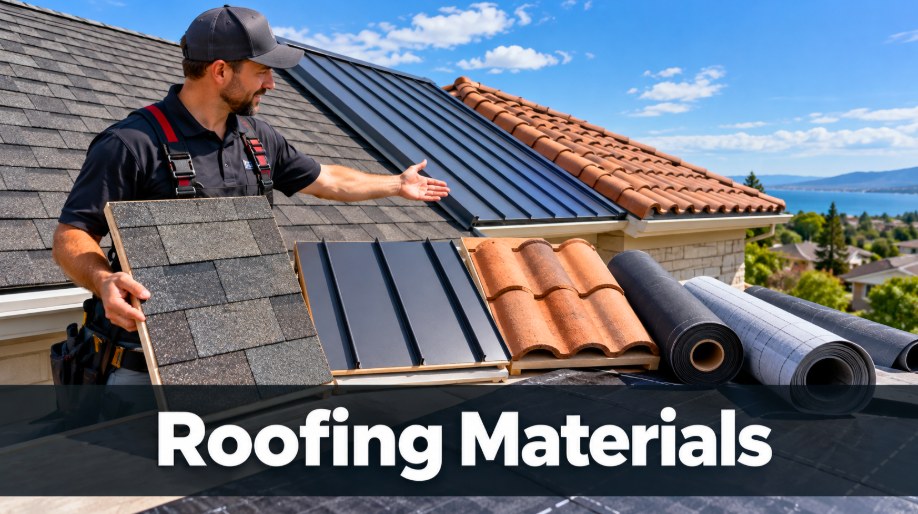
Roofing Materials: Find the Right Roofing System for Your Property
Choosing a roofing material involves more than comparing colors, textures, or installation prices. Different roofing systems respond differently to weather exposure, roof slope, structural movement, temperature changes, and maintenance conditions.
A material that performs well on one building may be unsuitable for another.
Asphalt Shingle Roofing
Asphalt shingles are widely used on residential sloped roofs.
They are available in multiple architectural profiles, colors, and product classifications.
Architectural Asphalt Shingles
Architectural shingles commonly feature a laminated construction that creates a dimensional appearance.
Product performance varies according to manufacturing specifications, installation requirements, wind ratings, and other design features.
Three-Tab Asphalt Shingles
Traditional three-tab shingles have a flatter appearance and a more uniform pattern.
They may be an option for certain projects, although product availability and specifications differ among manufacturers.
Important Considerations
Asphalt shingles require suitable roof slope, underlayment, fastening, ventilation or roof assembly design, and flashing integration.
They should not be treated as replacements for membranes designed specifically for low-slope roofs.
Metal Roofing
Metal roofing systems include standing seam panels, exposed-fastener panels, and metal products manufactured to resemble other roofing materials.
Metal roofs are available in steel, aluminum, copper, and other metals, depending on the application.
Standing Seam Metal Roofing
Standing seam roofs feature raised connections between adjacent metal panels.
Depending on the system, concealed clips or other fastening methods allow the panels to be secured while accommodating specified thermal movement.
Metal Roofing Advantages and Considerations
Metal roofing offers design flexibility and a range of finishes.
However, installation requirements depend on panel geometry, metal type, roof slope, underlayment, and fastening method.
Protective coatings, compatible accessories, and appropriate detailing are important considerations for long-term performance.
Clay Tile Roofing
Clay tile roofing is often associated with Mediterranean, Spanish, and traditional architectural styles.
Clay tiles are available in different profiles and finishes.
A clay tile roofing system relies on properly designed underlayment, flashing, fastening, and water management components.
Because tiles can be relatively heavy, the roof structure must be evaluated for the selected material and applicable loads.
Concrete Tile Roofing
Concrete roofing tiles provide another option for properties seeking a tile appearance.
They are available in multiple profiles, colors, and surface finishes.
Concrete tile products differ in weight, strength, and weather-resistance characteristics.
Like clay tile, concrete tile roofing requires appropriate structural support and carefully installed underlayment and flashing.
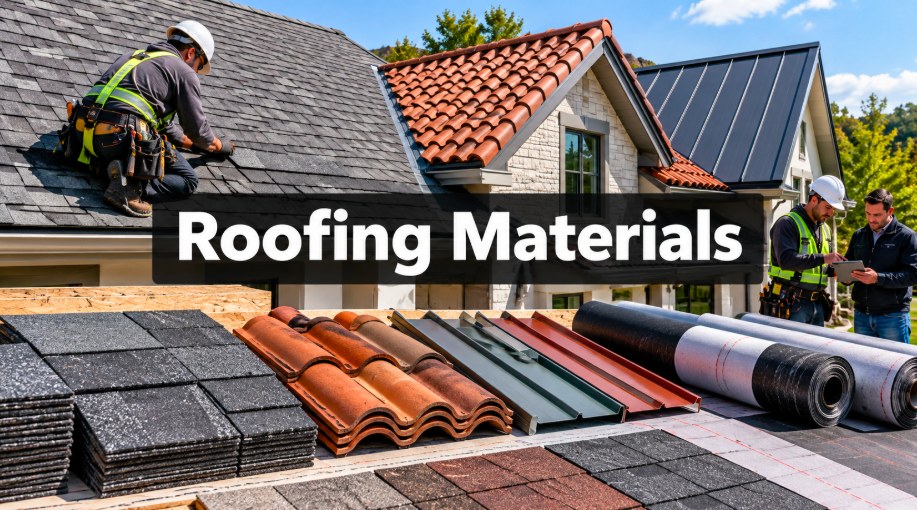
Flat and Low-Slope Roofing Materials
Low-slope roofs have different drainage and waterproofing requirements than steep-slope roofs.
The correct roof system must accommodate its design slope, expected drainage, rooftop equipment, and installation conditions.
TPO Roofing
Thermoplastic polyolefin is a single-ply roofing membrane commonly installed on commercial low-slope buildings.
Depending on the selected system, membranes may be mechanically attached, adhered, or installed using another approved method.
Compatible seams are generally joined by heat welding.
PVC Roofing
PVC roofing is another thermoplastic single-ply membrane used on certain commercial and low-slope applications.
PVC membranes can be heat-welded at compatible seams.
Chemical exposure, membrane formulation, insulation, and attachment requirements should be considered when selecting a PVC roofing system.
EPDM Roofing
EPDM is a synthetic rubber roofing membrane used in low-slope applications.
Systems may be mechanically attached, adhered, or ballasted where permitted by the particular roof design.
Seams and flashing connections require compatible primers, adhesives, tapes, or other manufacturer-approved products.
Modified Bitumen Roofing
Modified bitumen roofing incorporates asphalt modified with polymers.
Systems may use multiple layers and specialized installation methods.
Some products are torch-applied, while others use self-adhered, cold-applied, or other approved attachment techniques.
Installation should be performed according to product requirements and applicable fire-safety procedures.
Wood Shake and Wood Shingle Roofing
Wood roofing offers a natural appearance and is typically manufactured from species suitable for exterior roof exposure.
Wood shakes generally have a more textured appearance than machine-cut wood shingles.
This roofing category requires attention to local fire regulations, environmental exposure, ventilation, product treatment, and maintenance requirements.
Wood roofing may be restricted in certain fire-prone jurisdictions.
Slate Roofing
Natural slate roofing is valued for its distinctive stone appearance and long-established architectural use.
Slate roofing requires skilled installation, appropriate attachment methods, and a structure capable of supporting the selected material.
Individual slate tiles may be durable, but the complete roof's performance also depends on flashing, fasteners, underlayment, and workmanship.
Synthetic Roofing Materials
Synthetic roofing products are manufactured to resemble materials such as slate, wood shakes, or tile.
They may use engineered polymers, composite formulations, or other proprietary materials.
Product specifications vary substantially, so fire classification, wind resistance, expected service conditions, and approved installation details should be reviewed for each product.
How to Choose the Right Roofing Material
The best choice depends on the building and the property owner's priorities.
Important considerations include:
- Roof Slope: Determines which roofing systems are technically suitable.
- Structural Capacity: Must accommodate roofing dead loads and other applicable loads.
- Climate: Heat, wind, rainfall, hail, snow, and coastal exposure can influence material selection.
- Architectural Appearance: Roofing materials should complement the building's design.
- Budget: Consider the complete installed assembly, not only surface material prices.
- Maintenance: Different systems require different inspection and maintenance practices.
- Energy Performance: Insulation, surface reflectance, and overall roof design influence heat transfer.
- Local Regulations: Applicable building codes, fire requirements, and product approvals may limit certain options.
Roofing Material Installation Matters
Even a premium roofing product can perform poorly if installed over an unsuitable substrate or combined with incompatible accessories.
Flashing, drainage, fastening, underlayment, and manufacturer-specified details are essential to the entire roof system.
Before committing to a material, property owners should understand what the complete installation includes and whether the proposed system is appropriate for the building.
Roofing Material Prices in Los Angeles
Average 2026 installed prices per square foot in Los Angeles, including labor.
| Material | Best for | Price per sq ft |
|---|---|---|
| Asphalt shingle (architectural) | Most sloped homes, budget-friendly | $7 to $11 |
| Concrete tile | Tile look with strong durability | $15 to $22 |
| Clay tile | Spanish and Mediterranean homes | $18 to $25 |
| Metal (standing seam) | Long service life, modern look | $12 to $20 |
| TPO membrane | Flat and low-slope roofs | $9 to $14 |
| Modified bitumen | Low-slope and multi-layer systems | $8 to $12 |
| Slate | Premium natural stone roofs | $15 to $30 |
PVC, EPDM and synthetic roofing are quoted per project. New wood shake roofs are not permitted in Los Angeles. These are average market prices, not a quote. Your exact price is confirmed after a free inspection.
What Affects the Price
- Roof slope
- Structural capacity
- Climate and sun exposure
- Home style
- Budget
- Local regulations
Roofing Materials FAQs
What is the most popular roofing material in Los Angeles?
Asphalt shingles are the most common choice for sloped residential roofs because they are affordable and come in many styles. Clay and concrete tile are also very popular in Los Angeles, especially on Spanish and Mediterranean homes, while flat roofs often use TPO or modified bitumen.
Which roofing material lasts the longest?
Slate, clay tile, concrete tile and metal roofing generally offer longer service lives than asphalt shingles. However, a roof's lifespan also depends on proper installation, flashing, underlayment and maintenance, not just the surface material.
Can my house support a tile roof?
Not every house can. Tile is heavier than shingles, so the roof structure must be evaluated before switching. In Los Angeles, tile projects may need a structural plan review and sometimes truss reinforcement. We check this before recommending tile.
Are wood shake roofs allowed in Los Angeles?
New wood shake roofs are not permitted in Los Angeles because of fire safety rules. If you like the look of wood, synthetic shakes or other fire-rated alternatives may be an option, depending on the product's approvals and fire classification.
What is the best roofing material for a flat roof?
Flat and low-slope roofs need membrane systems designed to handle slower drainage, such as TPO, PVC, EPDM or modified bitumen. Shingles are not suitable for these roofs. The best choice depends on the building, rooftop equipment and drainage design.
Request Help Choosing Roofing Materials
Every roofing project deserves a material selection based on practical performance requirements, not appearance alone.
Contact Amoza Roofing Los Angeles to compare roofing materials, discuss installation options, and request a project estimate.