Roof Leak Repair: Find the Source and Stop Water Intrusion
A roof leak is not always located directly above the place where water becomes visible. Rainwater can enter through a roof penetration, move along framing members or underlayment, and eventually appear as a stain on a ceiling far from its original entry point.
This is one reason roof leaks can be difficult to diagnose without examining the roofing system and surrounding conditions.
Common Causes of Roof Leaks
Deteriorated Roof Flashing
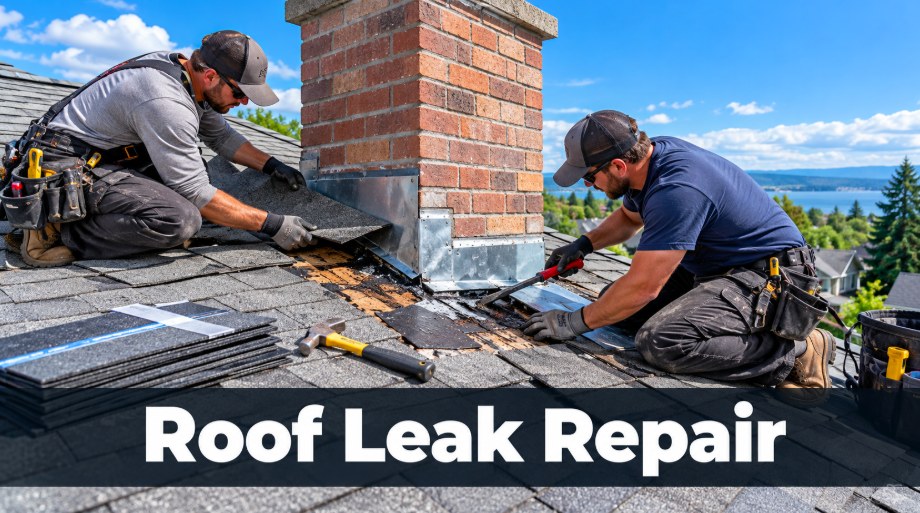
Flashing provides transitions between roofing materials and features such as chimneys, skylights, walls, and roof penetrations.
Loose, damaged, incorrectly overlapped, or deteriorated flashing can allow water to enter during rainfall.
Damaged Roof Coverings
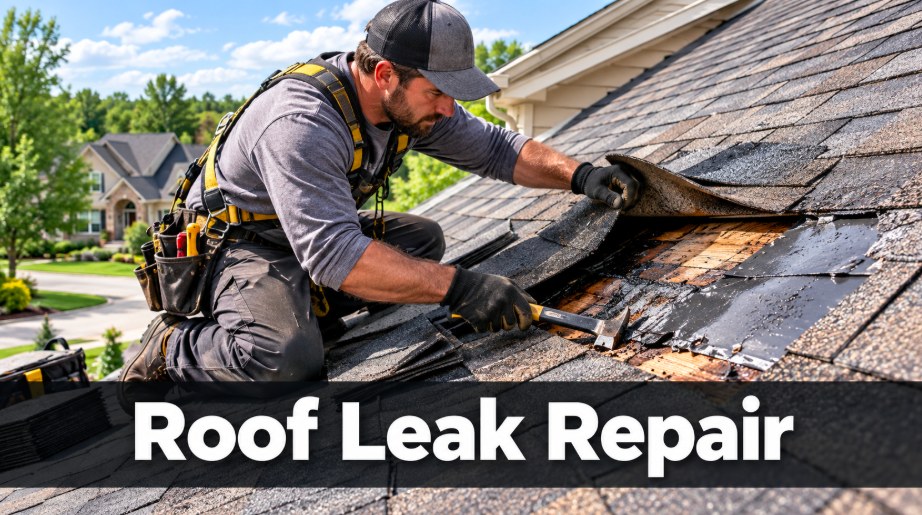
Missing shingles, cracked tiles, punctured roof membranes, and separated seams may create openings that allow moisture to reach underlying materials.
The roof's actual vulnerability depends on the condition of the complete assembly, not just the visible surface.
Plumbing Vent and Pipe Boot Problems
Vent boots can split or deteriorate over time. Water may pass around the opening where the pipe penetrates the roof.
A proper repair should address the defective boot or flashing assembly rather than relying on sealant over a failing component.
Roof Valleys and Drainage Areas
Roof valleys collect runoff from adjoining roof slopes. Debris, damaged valley lining, or poorly integrated roofing materials can interfere with normal drainage.
Low-Slope Roof Seams and Penetrations
Flat and low-slope roofing systems can develop leaks around membrane seams, mechanical fasteners, rooftop equipment supports, and drains.
Leak repairs should use methods approved for the particular membrane.
Signs of a Possible Roof Leak
Water intrusion may cause ceiling discoloration, damp insulation, peeling paint, unusual attic moisture, or dripping during heavy rain.
A stain that becomes larger after storms deserves attention, even when the ceiling does not feel wet.
Watermarks may remain after an earlier leak has stopped, so inspection is necessary to determine whether moisture entry is ongoing.
Why Repeated Roof Leaks Need More Attention
A leak that reappears after several patching attempts may indicate that the original source was not correctly identified or that multiple defects exist.
On some roofs, concealed moisture has already affected insulation or decking. Repairing only the visible exterior opening may not address those conditions.
If widespread deterioration exists, a broader roofing evaluation may be appropriate.
Emergency Roof Leak Concerns
If active water is entering the building, protect the affected interior area where it is safe to do so.
Avoid contact with wet electrical fixtures and do not attempt to climb onto a roof during storms.
When necessary, qualified professionals can evaluate temporary weather protection until permanent repairs are feasible.
Our Roof Leak Detection and Repair Process
Review the Symptoms
We evaluate where and when moisture appears, including whether the problem occurs during wind-driven rain or ordinary rainfall.
Examine Likely Entry Points
Accessible roofing materials, flashing, penetrations, valleys, and drainage components are checked.
Investigate Concealed Concerns
Where appropriate, additional evaluation may be needed to distinguish roof leakage from condensation, plumbing leaks, or other moisture sources.
Plan Corrective Work
The repair method is selected according to the roofing system and the specific defect.
Recheck Affected Areas
Completed repair details are reviewed, and any remaining uncertainty is explained.
Roof Leak Repair FAQs
Why is my roof leaking in a different spot from the stain?
How quickly can you fix a roof leak?
What should I do while my roof is leaking?
Why does my roof keep leaking after it was patched?
Could the water stain be something other than a roof leak?
Request Roof Leak Repair
A successful roof leak repair starts with accurate diagnosis and a repair compatible with the existing roofing system.
Contact Amoza Roofing Los Angeles to discuss roof leakage, flashing problems, or recurring water intrusion.