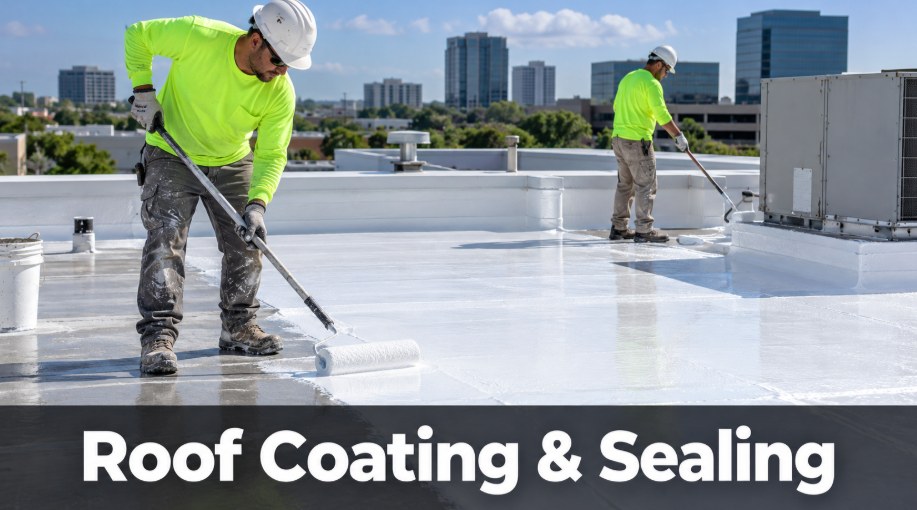
Roof Coating & Sealing Services: Protective Roof Surface Solutions
Roof coatings are specialized products applied to suitable roofing surfaces to provide additional weather protection, improve certain surface characteristics, or form part of a designed roof restoration system.
Unlike conventional roof paint, roof coatings must be selected according to the existing roofing material, surface condition, environmental exposure, and intended performance requirements.
What Is a Roof Coating?
A roof coating is a fluid-applied material designed to form a continuous protective layer over an approved roofing substrate.
Depending on the formulation, a coating may provide ultraviolet resistance, surface protection, improved reflectivity, or additional weather resistance.
However, roof coatings are not universal waterproofing solutions. Coatings cannot reliably compensate for failed structural components, widespread saturated insulation, or roofing assemblies that require replacement.
Types of Roof Coatings
Silicone Roof Coatings
Silicone coatings are used on certain compatible roof systems and can provide resistance to ultraviolet exposure and weathering.
Their performance depends on the specific product, substrate preparation, required thickness, and installation conditions.
Some silicone formulations are designed for areas exposed to intermittent ponding water, but suitability must be confirmed through manufacturer requirements.
Acrylic Roof Coatings
Acrylic coatings are commonly water-based and may be used on compatible roofing surfaces.
Reflective acrylic products can help reduce roof surface temperatures, particularly where solar exposure is high.
They require suitable application and curing conditions, and prolonged standing water can be problematic for certain formulations.
Polyurethane Roof Coatings
Polyurethane systems are available in formulations designed for particular substrates and exposure conditions.
Some products provide enhanced resistance to physical wear in selected applications.
Not every polyurethane coating is suitable for every roofing membrane or existing coating system.
Elastomeric Roof Coatings
Elastomeric describes a coating's ability to stretch and recover to a specified degree.
The term does not identify one single chemical formulation, and product capabilities vary.
Coating selection should consider movement, surface condition, expected weather exposure, and the complete roofing assembly.
Roof Sealing and Flashing Details
Roof sealing may involve treating compatible joints, penetrations, seams, and transition areas using specified products.
These details should be addressed before or as part of the main coating application.
Damaged flashing and open joints should not simply be concealed beneath a surface coating without proper correction.
Existing roofing materials must also be compatible with the sealants, primers, and coatings being considered.
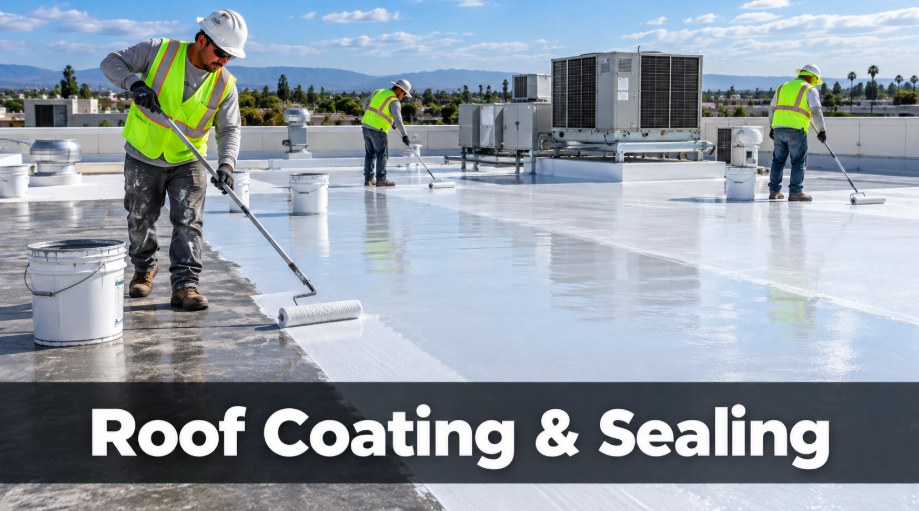
Can Reflective Roof Coatings Reduce Heat?
Some roof coatings are designed to reflect solar radiation and release absorbed heat.
These properties can lower roof surface temperatures and may reduce cooling demand in suitable climates and building configurations.
Actual energy savings vary with roof insulation, climate, building usage, heating requirements, and coating performance.
A reflective coating should not be presented as a guaranteed reduction in energy bills.
Is Roof Coating Better Than Roof Replacement?
Coating may be appropriate when the existing roof is structurally suitable, sufficiently dry, compatible with the proposed product, and eligible for the intended restoration system.
Roof replacement may be necessary when damage is widespread, insulation is substantially saturated, or the existing assembly cannot support a reliable coating application.
The choice should be based on inspection findings rather than coating cost alone.
Our Roof Coating Process
Roof Evaluation
Determine the existing roof type, condition, visible defects, and potential moisture concerns.
Surface Preparation
Remove contamination, loose material, and other substances that could interfere with adhesion.
Repairs
Address defects, failed seams, damaged flashing, and other issues requiring correction before coating.
Primer Application
Apply a compatible primer where specified by the coating manufacturer.
Coating Application
Install the chosen system at the required coverage rate and dry-film thickness.
Final Review
Examine application consistency, detail work, and curing requirements.
Roof Coating Cost
Average installed roof coating prices per square foot, with example totals for common roof sizes.
Acrylic Coating
- 1,000 sq ft: $650 to $1,750
- 2,500 sq ft: $1,650 to $4,400
- Water-based and reflective
Silicone Coating
- 1,000 sq ft: $1,500 to $2,500
- 2,500 sq ft: $3,750 to $6,250
- Strong UV and weather resistance
Typical Project
- Includes prep and application
- Repairs priced separately
- Depends on roof size and condition
Seam repairs, flashing corrections and primers are priced separately when needed. Roofs with saturated insulation may need repair or replacement instead of coating. These are average market prices, not a quote. Your exact price is confirmed after a free inspection.
What Affects the Price
- Roof size
- Coating type
- Surface preparation
- Repairs before coating
- Required coating thickness
Roof Coating & Sealing FAQs
How long does a roof coating last?
Can you coat any type of roof?
Will a reflective roof coating lower my energy bills?
Silicone or acrylic: which coating is better?
Does roof coating stop leaks?
Request a Roof Coating Evaluation
The effectiveness of a coating system begins with determining whether the existing roof is an appropriate candidate.
Contact Amoza Roofing Los Angeles to discuss roof coating, compatible sealing applications, and available restoration options.